

The difference between comfort and excess
The difference between comfort and excess
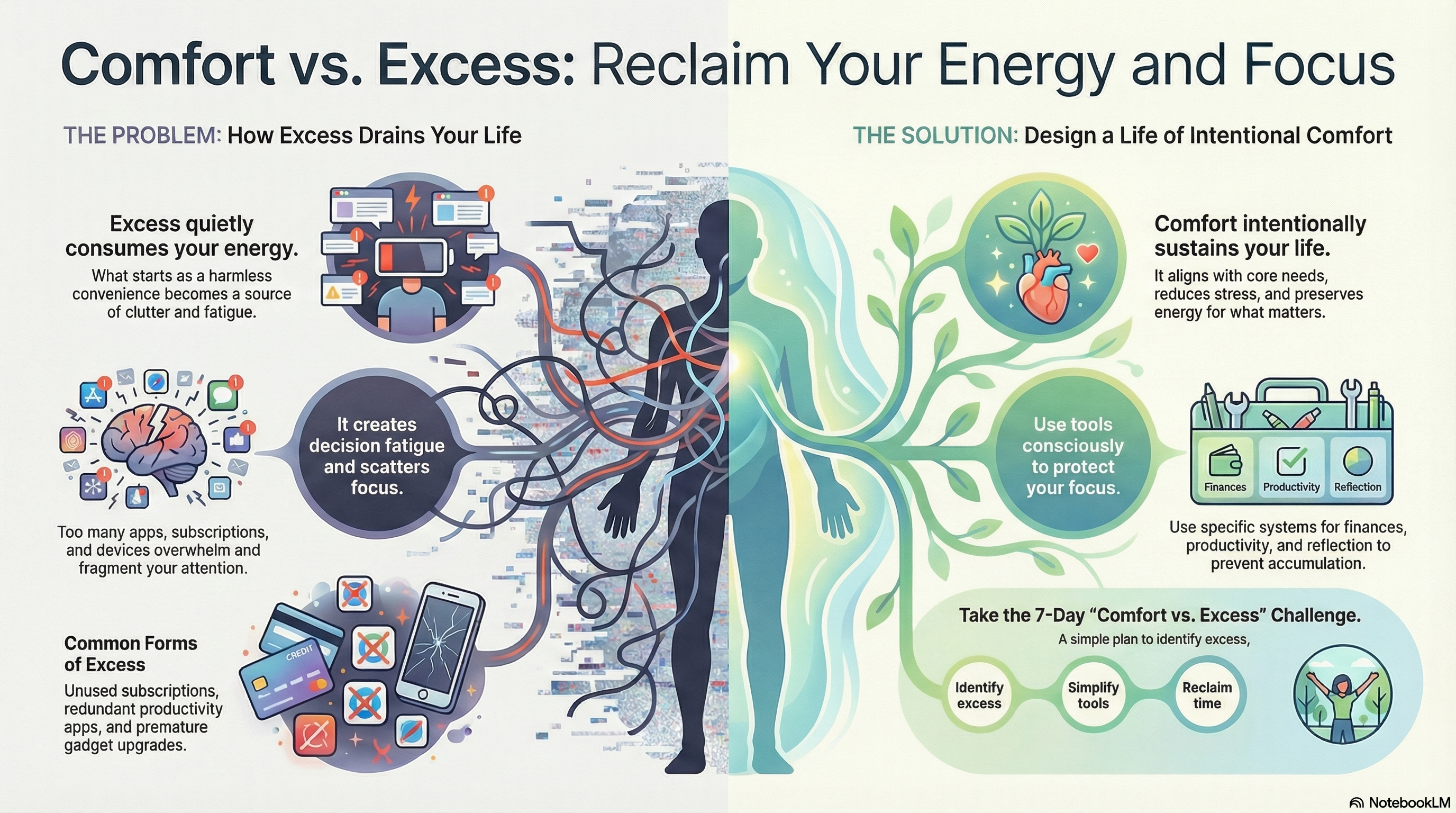
We all want comfort.
A warm home. A stable income. Tools that make life easier.
Comfort feels safe, necessary, and deserved.
Excess, on the other hand, is subtle.
It begins as a convenience: an extra subscription, one more app, a newer gadget.
It feels harmless at first.
Then quietly, it accumulates.
Soon, your days are cluttered. Your attention is fragmented. Your energy is drained.
There is a critical distinction here: comfort sustains life; excess consumes it.
Why Comfort Feels Good
Comfort aligns with human needs.
-
Stability comes first.
-
Unnecessary stress begins to fade.
-
Recovery becomes possible.
Examples of comfort include:
-
Automating bills to avoid late fees
-
Blocking time for self-care
-
Having reliable tools for work and life
When comfort is intentional, life feels manageable and energy is preserved.
How Excess Creeps In
Excess often masquerades as progress or necessity:
-
Adding multiple productivity apps
-
Subscribing to services you rarely use
-
Buying the latest devices before the old ones are fully utilized
Excess increases decision fatigue.
It scatters attention.
It steals focus from what matters most.
In other words: comfort supports life, excess erodes it.
Tools to Maintain Comfort Without Falling into Excess
The key is intentional systems.
These tools help you enjoy comfort while avoiding accumulation:
1. Financial Tools for Conscious Spending
Excess often shows up in finances as recurring payments and impulsive purchases.
-
YNAB (You Need A Budget) – Assign every dollar a purpose and prevent unnecessary spending.
-
Revolut – Track real-time expenses and identify potential excess.
-
Rocket Money – Cancel unused subscriptions and redirect resources toward meaningful comfort.
Result: Money supports intentional living. You experience comfort without the hidden cost of excess.
2. Productivity Tools That Protect Energy
We often accumulate tools thinking “more will help.”
But multiple apps, reminders, and notifications can create overload.
-
Notion – Organize projects, tasks, and personal systems efficiently.
-
Todoist – Prioritize essential tasks to reduce mental clutter.
-
Google Calendar – Schedule time for work, rest, and recovery intentionally.
Result: Your day supports comfort, not accumulation. You focus on what matters.
3. Reflection Tools That Prevent Excess
Awareness is your defense against excess.
By observing habits, routines, and purchases, you can choose comfort consciously.
-
The Five Minute Journal – Reflect daily on priorities and meaningful accomplishments.
-
Day One Journal – Track experiences, insights, and patterns of consumption.
-
Bullet Journal (BuJo) – Visualize priorities and cycles, keeping comfort intentional.
Result: You notice when “more” is creeping in. Comfort stays intentional, excess stays out.
The Benefits of Choosing Comfort Over Excess
When life is designed around comfort:
-
Energy is preserved
-
Stress decreases
-
Decisions become intentional
-
Focus and creativity flourish
Excess is no longer a distraction.
Your life feels spacious.
Recovery feels natural.
Choice feels liberating.
The 7-Day “Comfort vs Excess” Challenge – Revamped
Goal: Distinguish between what truly supports your life (comfort) and what drains you (excess). Gain energy, focus, and calm in just 7 days.
Final Thought
Comfort is intentional support for your life. Excess is a trap that steals energy, focus, and peace.
By consciously choosing comfort, you:
-
Protect your mental and physical energy
-
Strengthen focus and clarity
-
Reduce stress and overwhelm
-
Create a sustainable, fulfilling routine
Use tools thoughtfully. Reflect daily. Choose comfort over accumulation.
Read article :Choosing Experiences Is the Real Upgrade
