wakation
wakation

About Allan Jacobi

This author has not yet filled in any details.
So far Allan Jacobi has created 50 blog entries.

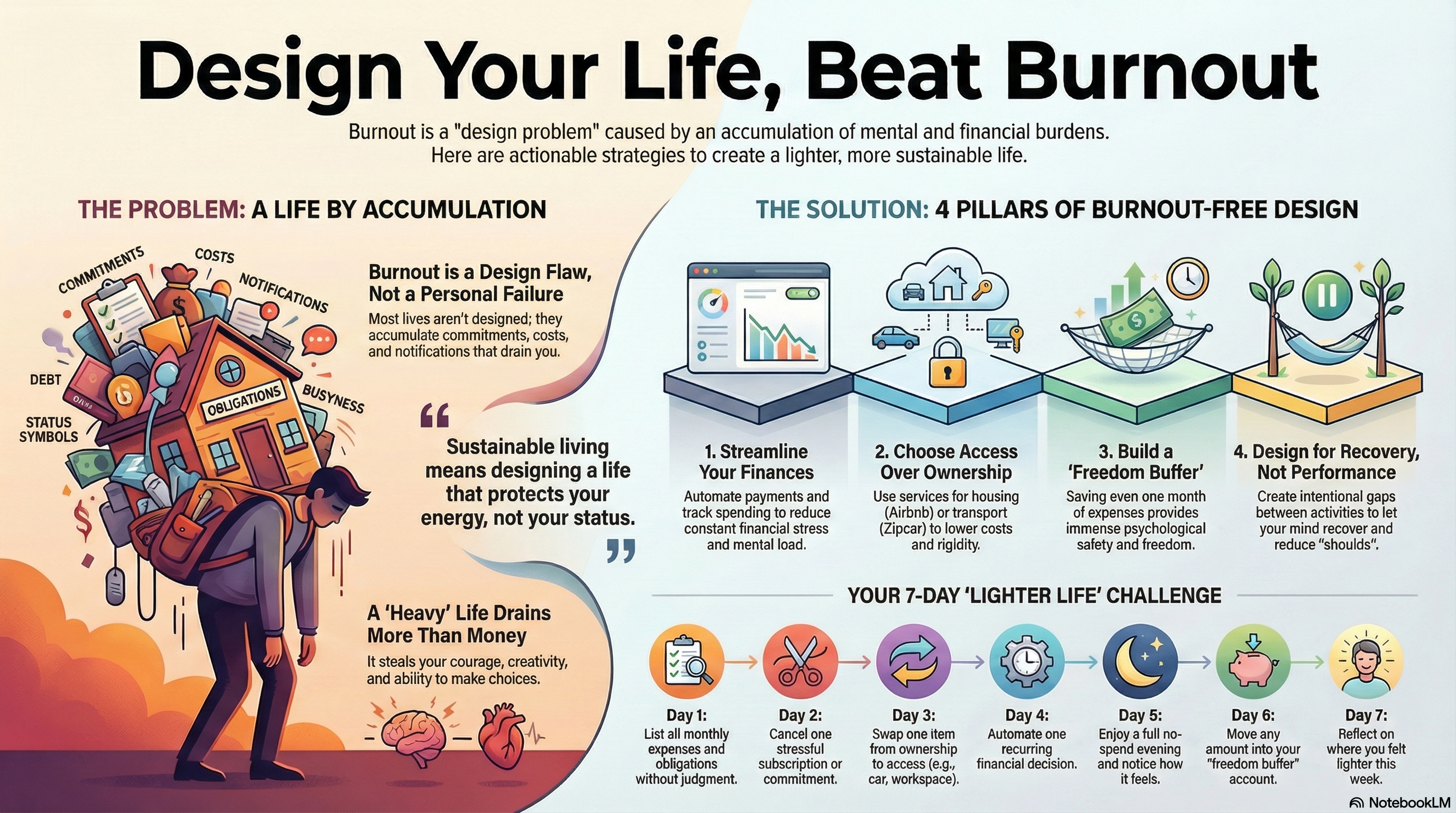
Designing a life that doesn’t burn you out

rue sustainability isn’t built on trends or productivity hacks, but on intentional life design. When energy, time, and attention are protected, burnout naturally fades. Simplifying commitments creates mental clarity and restores creativity. A well-designed life supports long-term wellbeing—not constant performance.

By |2026-01-31T13:40:13+00:00January 12, 2026|Mindset & Mental Reset|0 Comments

Stop Procrastinating with Fewer Distractions

Procrastination and low motivation are often symptoms of distraction, not laziness. Attention is a finite resource under constant attack from notifications and noise. Reducing friction and protecting focus is more effective than forcing discipline. Small structural changes can restore presence, confidence, and sustainable productivity.

By |2026-01-31T13:22:53+00:00January 11, 2026|Work & Life Balance|0 Comments

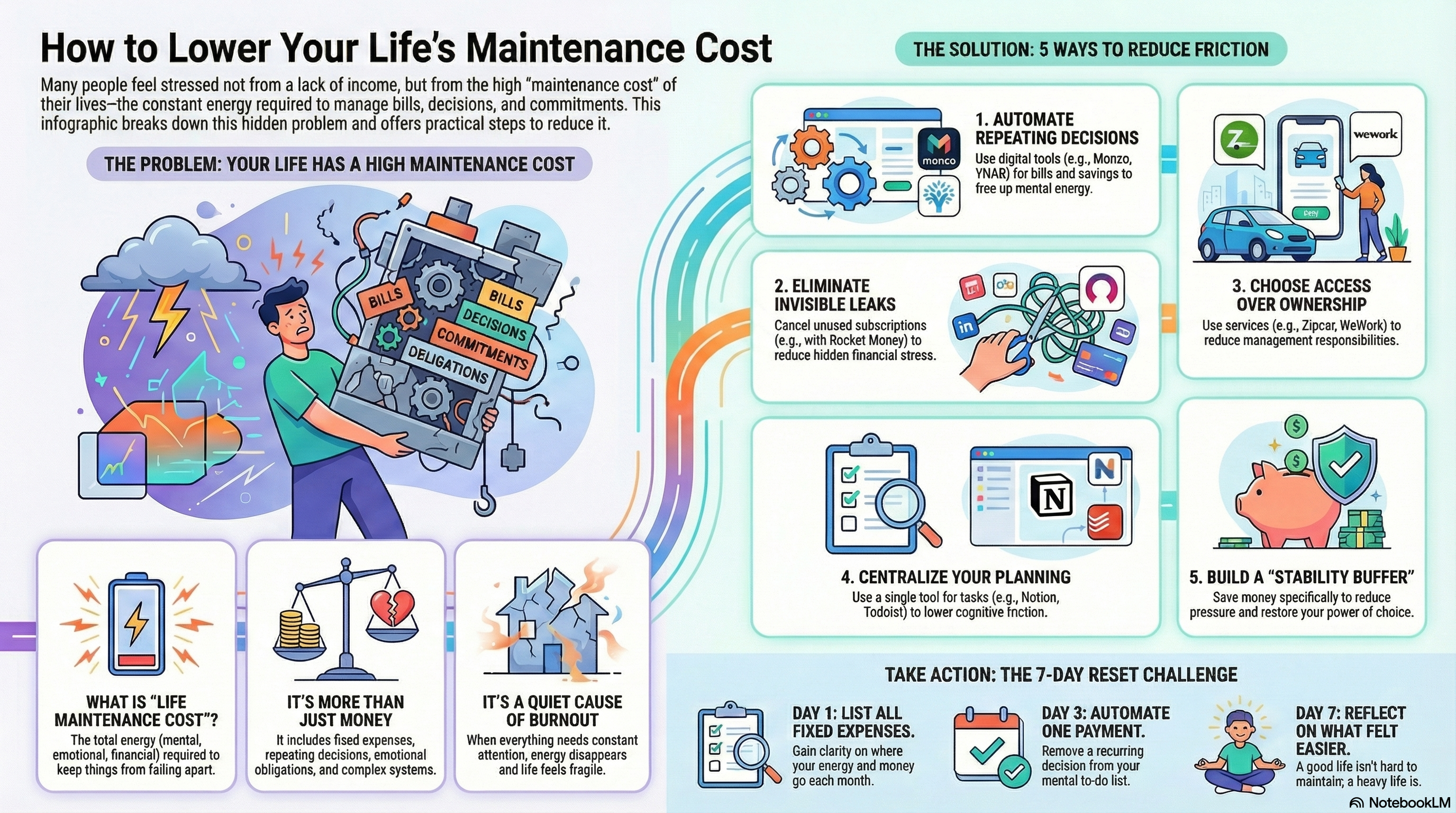
How to reduce your life’s “maintenance cost”

High life maintenance cost is rarely about income—it’s about friction. When systems demand constant attention, energy is silently taxed every day. Reducing maintenance through automation and simplification restores stability and choice. A low-maintenance life isn’t minimalistic; it’s strategically designed for sustainability.

By |2026-01-08T09:40:39+00:00January 8, 2026|Money, Freedom & Minimalism|0 Comments

The Illusion of “I’ll Do It Later”

Procrastination is not a failure of discipline but a strategy for emotional regulation. “Later” works because it temporarily reduces discomfort, not because it serves progress. Sustainable action comes from lowering emotional and structural friction, not raising willpower. Change begins when starting feels safe, small, and identity-neutral rather than evaluative.

By |2026-01-06T13:14:43+00:00January 6, 2026|Work & Life Balance|0 Comments

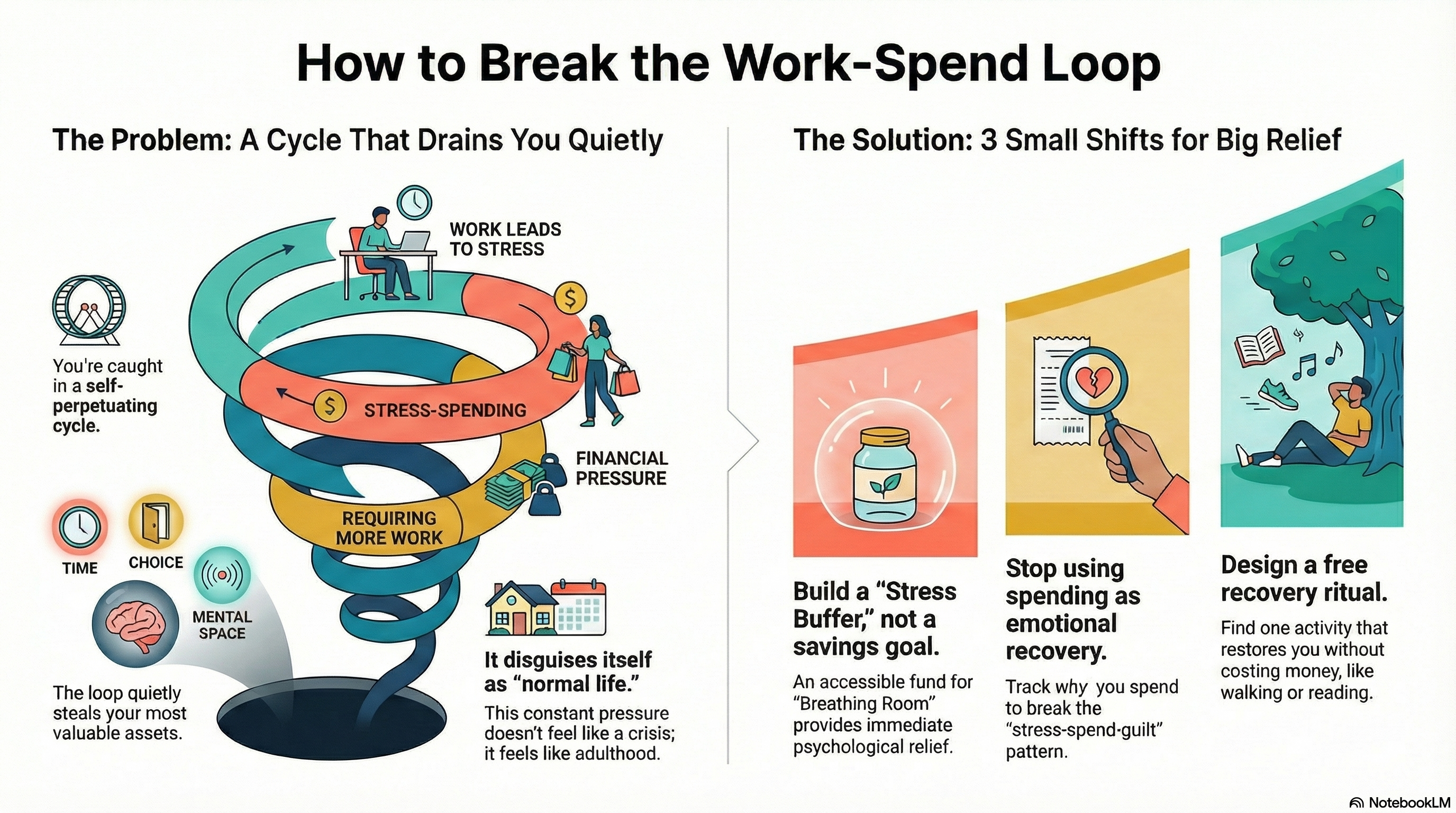
Escaping the loop: work → spend → stress → repeat

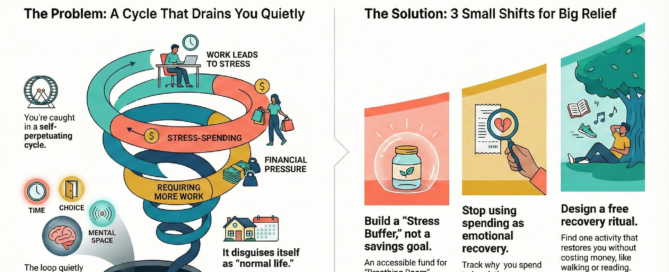
Many people mistake chronic stress for a personal failure, when it is actually the result of an unexamined financial feedback loop. This cycle reinforces reactivity, leaving no room for rest, clarity, or intentional choice. True financial well-being comes from designing systems that reduce cognitive load, not from earning more. Breaking the loop starts with small structural changes that restore calm and control.

By |2026-01-05T13:03:26+00:00January 5, 2026|Mindset & Mental Reset|0 Comments

Small Monthly Costs That Trap Your Life Decisions

Small, unnoticed expenses often dictate life more than major choices. They silently set a minimum pace, limiting freedom and flexibility. Tracking and reducing these recurring costs restores optionality. Intentional financial decisions create space for growth and meaningful life changes.

By |2026-01-04T12:58:38+00:00January 4, 2026|Money, Freedom & Minimalism|0 Comments

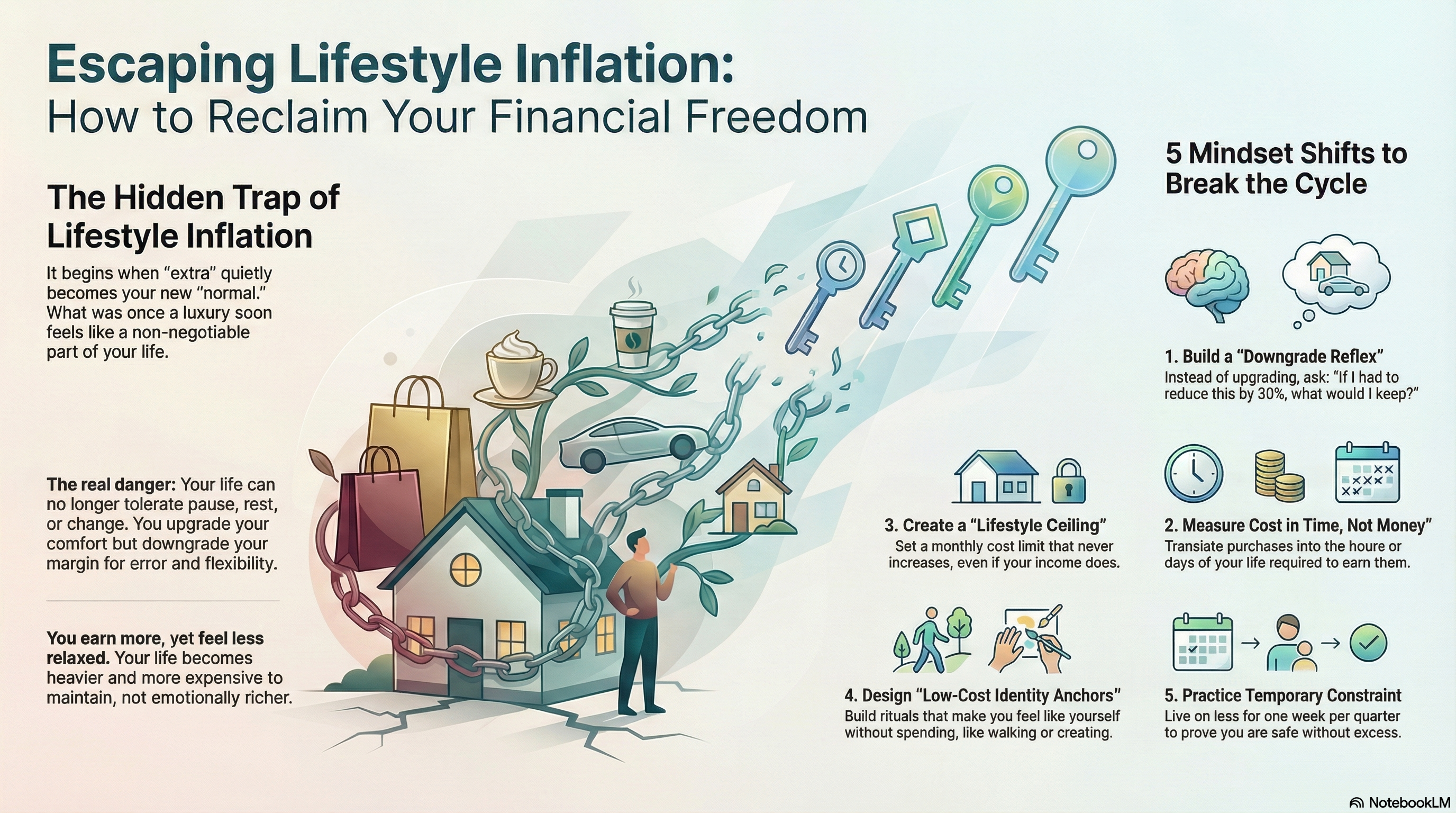
The psychology of lifestyle inflation

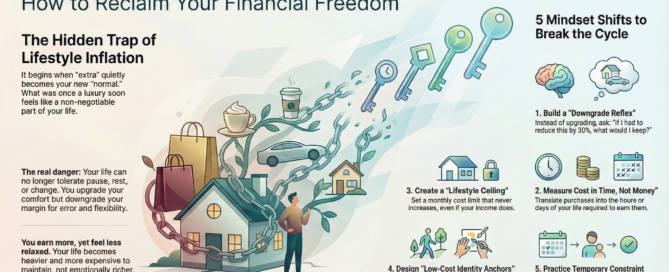
Lifestyle inflation is one of the most subtle financial traps, starting not with overspending but with a quiet shift in living standards. This perspective is powerful because it focuses on psychology and identity rather than rigid budgeting. Tools like setting a lifestyle ceiling and measuring costs in time help restore control and mental clarity. It shows that real financial freedom comes from awareness, not extreme discipline.

By |2026-01-01T07:10:35+00:00January 1, 2026|Money, Freedom & Minimalism|0 Comments

You Don’t Hate Work — You Hate Meaningless Work

Most burnout isn’t caused by too much work—it stems from misaligned effort. When daily tasks lack meaning, motivation fades and life feels fragmented. Reconnecting work with purpose restores focus, energy, and calm. Small, intentional changes can turn busyness into real progress.

By |2025-12-30T14:25:08+00:00December 30, 2025|Work & Life Balance|0 Comments

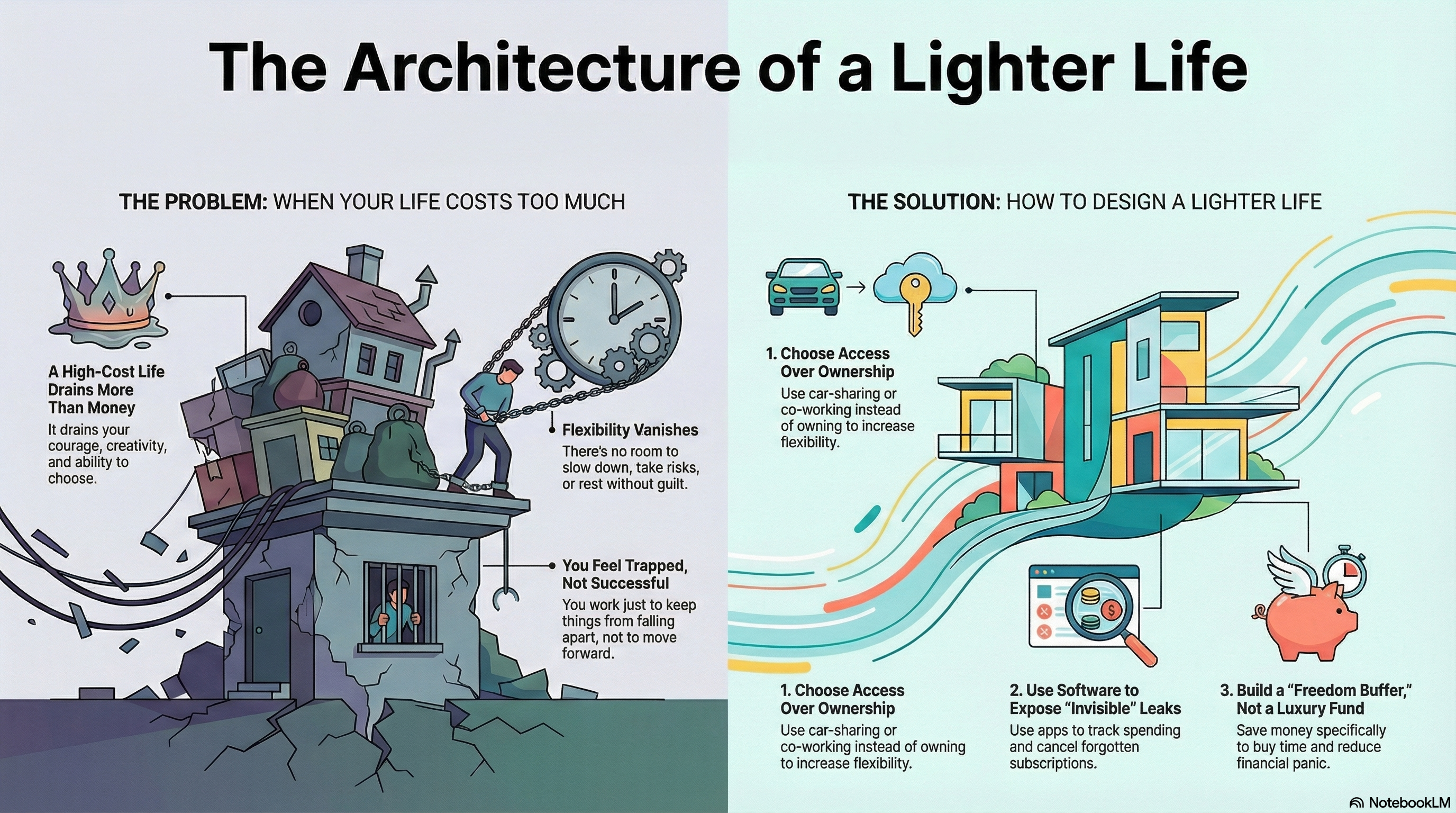
How to Design a Life That Costs Less to Live

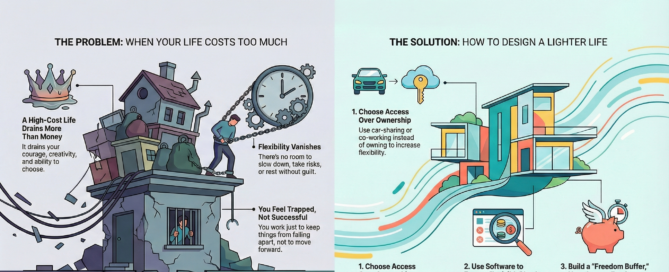
This piece smartly reframes financial stress as a life-design problem, not an income one. It shows how fixed costs, cognitive load, and lack of flexibility drain autonomy and creativity. By focusing on intentional systems, automation, and freedom buffers, it offers modern, low-friction solutions. A concise, psychologically grounded take on why lighter lives create real leverage.

By |2025-12-29T14:59:15+00:00December 29, 2025|Work & Life Balance|0 Comments

The Quiet Cost of Chasing Comfort

Comfort feels safe—but too much of it quietly shrinks your choices and dulls your edge. When life becomes effortless, challenges feel overwhelming and ambition starts fading. The key isn’t rejecting ease—it’s introducing small, intentional friction that rebuilds confidence and resilience. Even minor daily actions, like doing one thing the hard way or embracing silence, can transform how alive you feel. In the end, freedom isn’t about avoiding comfort—it’s about choosing it on your own terms.

By |2025-12-28T15:43:36+00:00December 28, 2025|Mindset & Mental Reset|0 Comments
Go to Top