

Why constant travel is exhausting
Why constant travel is exhausting
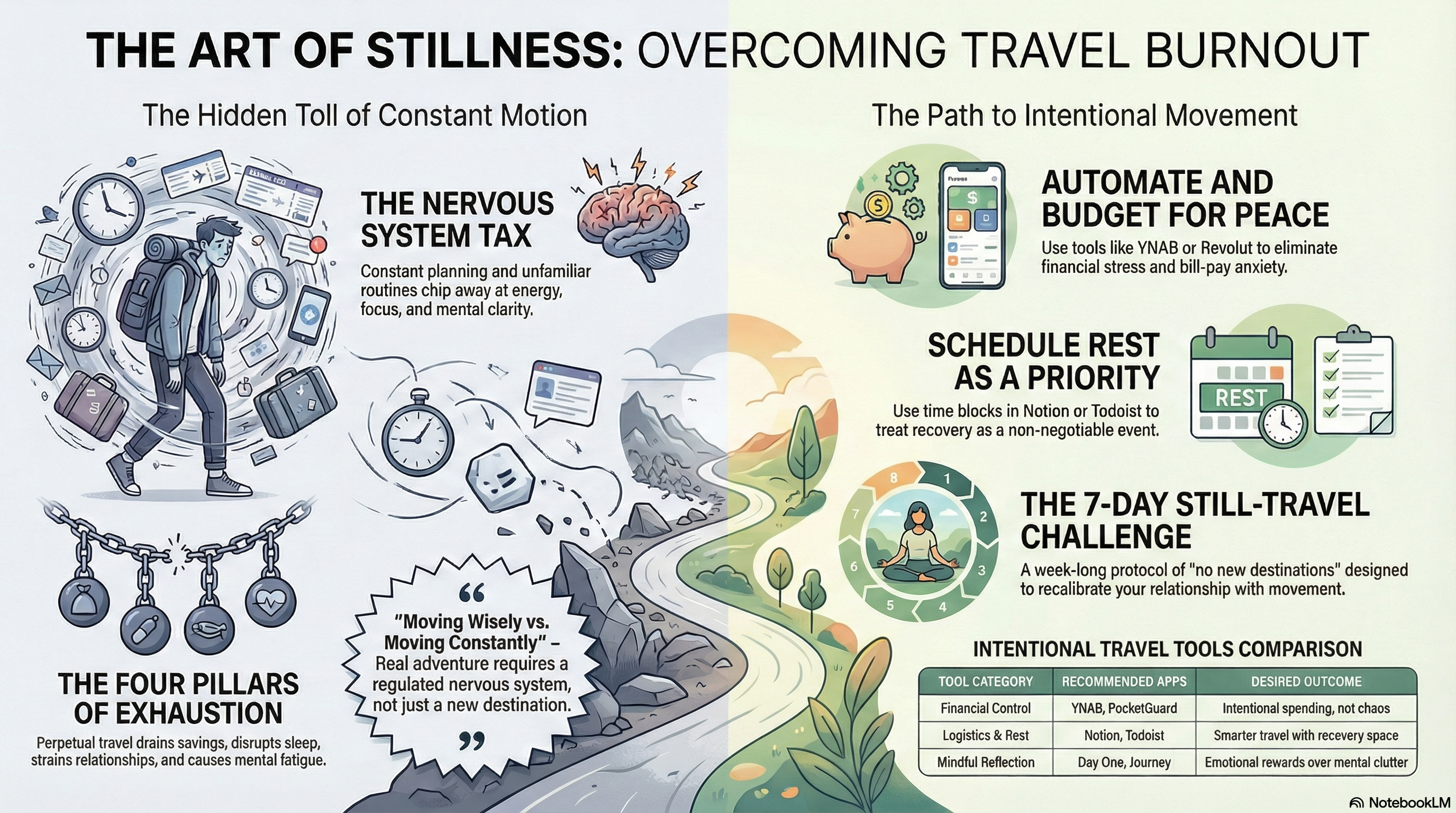
You wake up in a new city. Another airport lounge, another check-in, another hotel key card.
The scenery changes, but your body and mind feel heavy.
Travel is meant to refresh, to give us perspective. Yet when it becomes constant, it does the opposite. You feel restless, drained, and sometimes even lonelier than at home.
The excitement fades. Every itinerary, every decision, every unfamiliar routine chips away at your energy. This isn’t about destinations. It’s about the cost of continuous movement on your nervous system, your focus, and your finances.
The Hidden Costs of Constant Travel
Even when work is remote or your career allows flexibility, perpetual travel has hidden tolls:
- Mental Fatigue: Constant planning, navigating new cities, and adapting to changing routines strains the mind.
- Physical Exhaustion: Jet lag, disrupted sleep, and irregular meals wear the body down.
- Financial Pressure: Frequent travel—even short trips—can quietly drain savings.
- Emotional Strain: Connections with friends, family, or even yourself are interrupted.
Even a life that looks adventurous online can feel heavy in reality.
Practical Ways to Travel Without Burning Out
Travel doesn’t have to be exhausting. Using intentional systems and digital tools, you can preserve energy, money, and mental clarity.
1. Track and Budget Every Trip
Financial stress magnifies exhaustion. Know what you’re spending before you leave.
- YNAB (You Need A Budget) – Allocate every dollar for flights, accommodations, meals, and experiences.
- PocketGuard – Get real-time visibility on what’s safe to spend while traveling.
Outcome: Your trips feel intentional, not chaotic. Money worries no longer overshadow experiences.
2. Automate Bills and Recurring Expenses
Worrying about bills while on the move adds invisible stress.
- Revolut – Automate payments and track your spending internationally.
- Wise – Schedule international transfers to avoid missed payments.
Outcome: Focus stays on the experience, not overdue invoices or late fees.
3. Schedule Rest Like a Priority
It’s tempting to overpack your itinerary, but constant activity drains energy faster than travel itself.
- Notion – Build a simple travel dashboard with time blocks for rest, meals, and movement.
- Todoist – Set daily priorities for experiences rather than cramming every hour.
Outcome: You travel smarter, not harder. Your nervous system has space to recover.
4. Capture Meaningful Moments, Not Everything
Trying to document every sight, meal, or experience can be mentally exhausting.
- Day One – Journal reflections instead of endless photos.
- Journey – Record what truly restores energy or inspires you.
Outcome: Memories, not data, become the measure of your trip. Less mental clutter, more emotional reward.
5. Focus on Local and Short Escapes
Constantly jumping continents isn’t necessary. Mini-escapes can reset the mind just as effectively:
- Explore nearby towns or nature spots with Airbnb or Hipcamp.
- Use public transit or train trips instead of costly flights.
Outcome: You experience novelty without the overwhelm or high cost of constant travel.
The Benefits of Intentional Travel
When you combine financial planning, digital tools, and deliberate rest:
- Stress decreases naturally
- Energy returns faster between trips
- Focus and clarity improve
- You can enjoy travel without mental or financial hangovers
The magic isn’t in moving constantly—it’s in moving wisely.
The Still-Travel Challenge
7 Days to Feel Rested Without Going Anywhere New
This challenge is for those who’ve moved a lot, seen a lot, but felt very little relief.
For seven days, add no new destinations.
Change how you move—not how far.
Why The Still-Travel Challenge Works
This practice:
-
Calms the nervous system
-
Reduces decision fatigue
-
Reframes freedom as intentional movement, not constant motion
Sometimes you don’t need a new city.
You need a new relationship with movement.
Try it once.
You may not want to travel the same way again.
Read Article: You Don’t Need to Travel Far to Feel Free
