

Designing a life that doesn’t burn you out
Designing a life that doesn’t burn you out
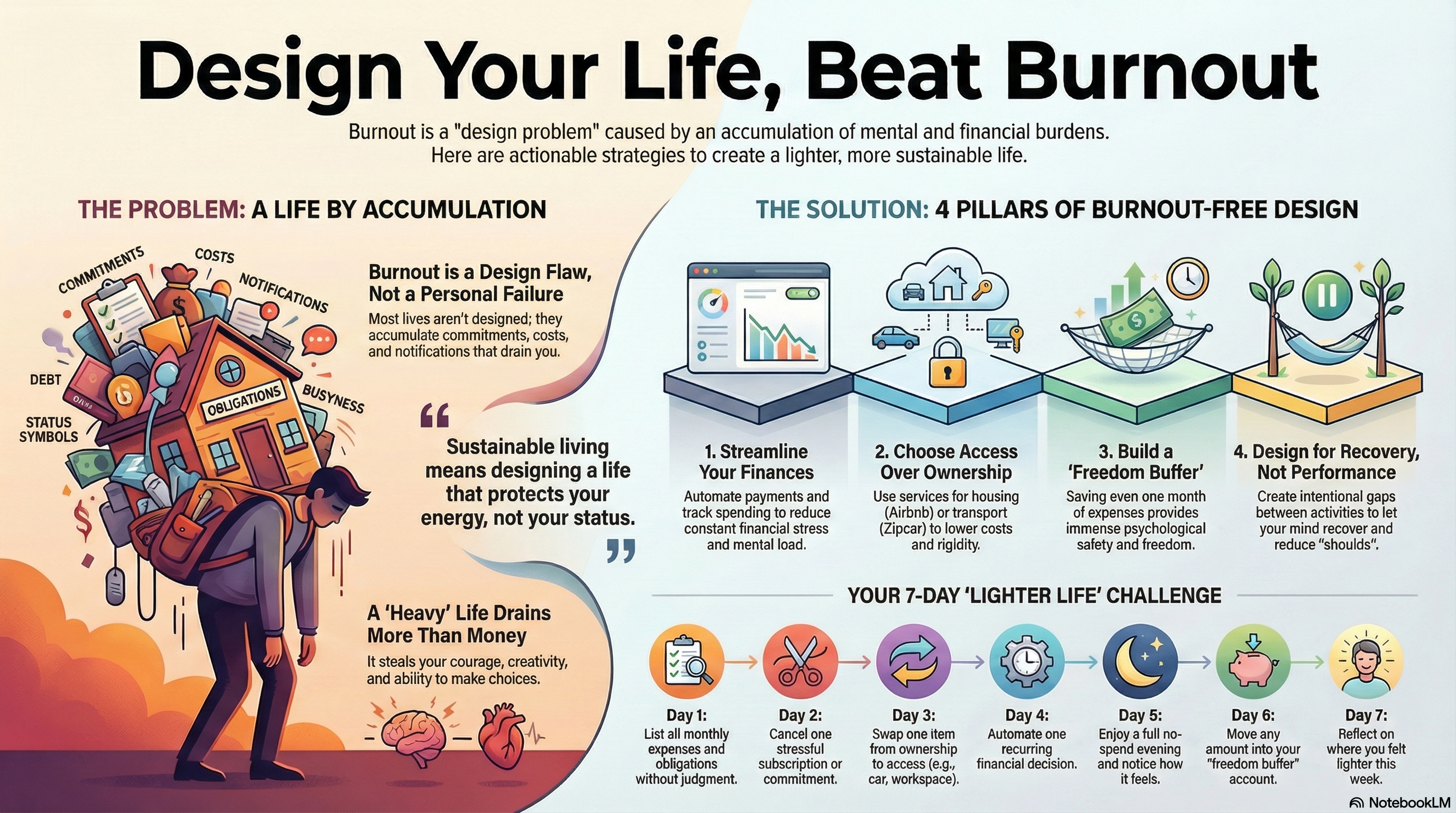
Most people believe sustainable living means using the latest apps, following trendy habits, or buying products marketed as “better.”
However, burnout does not come from missing a trend.
It comes from living inside a system that quietly drains your energy every day.
Your calendar is full, yet you still feel behind.
Your income is stable, yet peace feels fragile.
You move from task to task, hoping the next break will finally help you recover.
But it rarely does.
This is the uncomfortable truth:
When life costs too much energy, long-term sanity becomes the real luxury.
Rest feels earned instead of natural.
Creativity feels optional.
And your nervous system never truly shuts down.
The Real Problem: Lives That Are Never Designed
Most lives are not intentionally designed.
They simply accumulate.
Commitments stack up.
Subscriptions multiply.
Fixed costs rise quietly over time.
As a result, your time, attention, and emotional energy are constantly taxed.
Not dramatically—but consistently.
A life that looks successful on the outside can still feel unsustainable on the inside.
True sustainable living is not about status or aesthetics.
It is about designing a life that protects your energy first.
Practical Ways to Build a Sustainable, Burnout-Free Life
1. Automate Decisions That Drain Your Energy
Small daily decisions consume more mental energy than we realize.
Over time, this decision fatigue leads directly to burnout.
Use digital banking apps like
Monzo, Revolut, or Wise
to automate bills, transfers, and recurring payments.
Automate savings with tools such as
YNAB or Plum.
When money stops demanding constant attention, your nervous system begins to relax.
2. Track Invisible Leaks of Time and Money
Most stress does not come from big mistakes.
It comes from things you don’t see.
Cancel forgotten subscriptions using
Rocket Money.
Monitor real spending patterns with
Emma or Cleo.
Clarity alone can feel like a raise—without earning more.
3. Replace Ownership With Access
Ownership often feels secure.
But it can also be expensive and rigid.
Choose Airbnb for short-term housing instead of long leases.
Use Zipcar or Turo instead of owning a car.
Work from WeWork or Spaces instead of maintaining a permanent home office.
These changes reduce both financial pressure and mental load.
4. Build a “Freedom Buffer,” Not a Luxury Fund
This is money saved not for things, but for time and options.
Even one month of expenses saved in
Ally Bank or Simple
creates psychological safety.
Three months changes how you view risk, work, and rest.
Freedom buffers reduce burnout by restoring choice.
5. Design Your Life Around Recovery, Not Performance
A sustainable lifestyle is built around recovery cycles.
Reduce unnecessary commitments.
Limit constant “shoulds.”
Create space between activities.
This margin is where resilience and creativity live.
What Happens When Your Life Costs Less Energy
When your life becomes lighter by design:
-
You feel calmer without trying
-
Choices stop being fear-driven
-
You can say no without guilt
-
Rest feels safe instead of stressful
Over time, confidence returns.
Creativity follows.
Life shifts from being managed to being intentionally chosen.
This is what long-term sanity looks like in practice.
The 7-Day Long-Term Sanity Challenge
Don’t overhaul your life.
Test a lighter version of it.
Even a small shift proves something important:
A good life isn’t expensive.
A heavy life causes burnout.
Designing a life that doesn’t burn you out
is the most sustainable decision you can make.
Read article : The Quiet Cost of Chasing Comfort
