

What Sustainable Living Really Means
What Sustainable Living Really Means
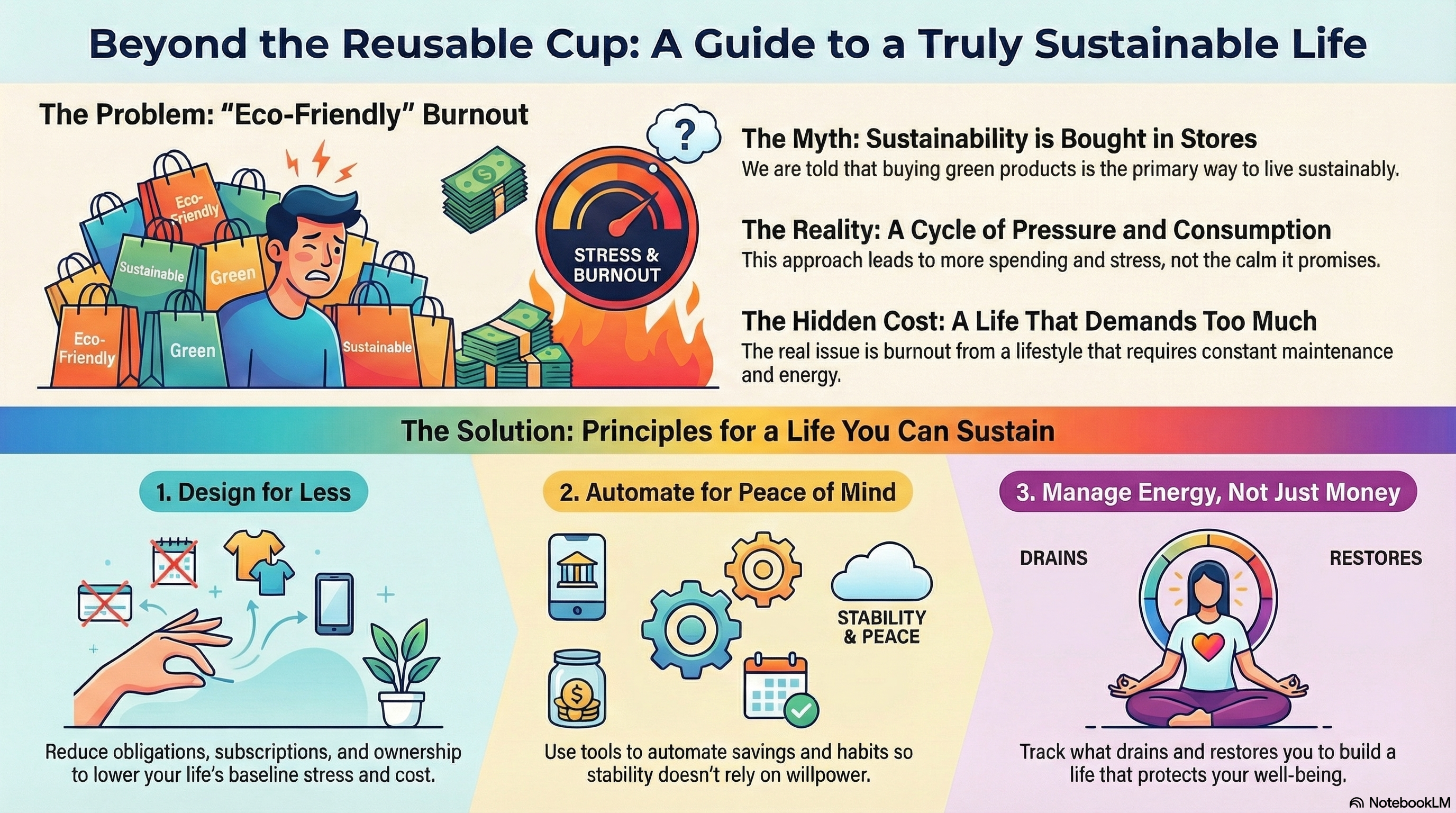
True sustainability isn’t measured by the brands you choose or the labels you carry; it’s measured by how much freedom, calm, and space you actually have in your day-to-day life.
Most people think they understand sustainable living.
They picture reusable cups, eco-friendly packaging, bamboo toothbrushes, and brands telling them they can “save the planet” by buying the right things.
But that version of sustainability is convenient — and incomplete.
Because real sustainable living doesn’t start in stores.
It starts in your nervous system, your calendar, and your bank account.
And this is where many people feel the disconnect.
They try to live “better,”
but feel more tired.
They spend more to feel responsible,
but feel more pressure.
They’re told sustainability is about conscious choices,
yet their lives feel anything but calm or intentional.
That’s because what’s being sold as sustainability is often just consumption with a better story.
The Real Cost Nobody Talks About
Brands sell sustainability as an upgrade.
A new version of the same lifestyle — just greener, cleaner, more ethical.
But the real problem isn’t what we buy.
It’s how much energy our lives demand from us.
Long work hours to afford a “good” lifestyle.
Constant decisions about money, upgrades, replacements.
Homes, schedules, and commitments that require nonstop maintenance.
This kind of life isn’t sustainable —
not for the planet, and not for you.
Burnout, anxiety, and financial stress are signs of an unsustainable system.
And no reusable product fixes that.
True sustainability asks a harder question:
How much does my life cost — financially, mentally, emotionally — to keep running?
What Sustainable Living Actually Looks Like
Real sustainability is quieter.
Less visible.
And far less marketable.
It’s about reducing dependency, not optimizing consumption.
Here’s what it really means in practice:
Practical, Modern Ways to Live Sustainably (For Real)
These aren’t ideals. They’re tools — accessible, practical, and life-changing when applied consistently.
1. Design a life with fewer moving parts
A life with fewer subscriptions, fewer obligations, fewer “must-maintain” items is naturally more sustainable.
Use YNAB or Monarch Money not just to budget, but to identify what requires constant effort to keep.
If something costs money and mental energy, it’s draining you twice.
2. Replace ownership with access where possible
Ownership is one of the biggest hidden drivers of overwork and stress.
Car sharing, short-term rentals, digital services, flexible workspaces — these reduce long-term commitments.
Platforms like Getaround, Zipcar, or flexible lease services quietly lower your life’s baseline cost and pressure.
Less ownership = less maintenance = less burnout.
3. Make sustainability automatic, not moral
When sustainability relies on willpower or guilt, it fails.
Automate what matters:
- Automatic transfers to savings
- Automatic bill payments
- Automatic tracking of spending and habits
Apps like Revolut, Wise, or Monzo reduce friction so you don’t have to “try” to be sustainable — you just are.
4. Track energy, not just money
A sustainable life protects your energy before it protects your wallet.
Use Daylio or Notion to track:
- What drains you
- What restores you
- What feels “worth it”
You’ll quickly see which parts of your life are unsustainable — even if they look successful on paper.
5. Build resilience, not perfection
Sustainable living isn’t about doing everything right.
It’s about being able to slow down without everything breaking.
That means:
- Emergency buffers instead of luxury upgrades
- Flexible schedules instead of packed calendars
- Skills instead of constant outsourcing
This is sustainability at the human level.
How Your Life Changes When You Get This Right
You stop feeling like you’re constantly catching up.
Your expenses become predictable instead of stressful.
Rest stops feeling like a reward — and starts feeling normal.
You work because you choose to, not because your life collapses if you pause.
Your choices come from intention, not obligation.
And ironically, when your life costs less to maintain,
you have more room to care — about people, the environment, and yourself.
That’s real sustainability:
a life you can keep living without burning out.
The 7-Day “Real Sustainability” Challenge
Don’t buy anything new. Just observe and redesign.
If you feel calmer — even slightly — you’re doing it right.
Because sustainable living isn’t about saving the planet by buying better things.
It’s about building a life that doesn’t slowly exhaust the person living it.
And that kind of sustainability is the one that actually lasts.
Read article : The long-term cost of convenience
